2/5: Theoretical Frameworks to Help Understand This Issue
In this section of our journey, we will now explore four key theories related to early child development and their connection to the impact of technology. Below are the four theories we will be examining:
Piaget's Cognitive Development Theory
Vygotsky's Sociocultural Theory
Erikson's Psychosocial Development Theory
Bronfenbrenner's Ecological Systems Theory
The reference (Levine & Munsch, 2024) was used for the content in this whole section!
Piaget's Cognitive Development Theory
🧠
Piaget's Cognitive Development Theory 🧠
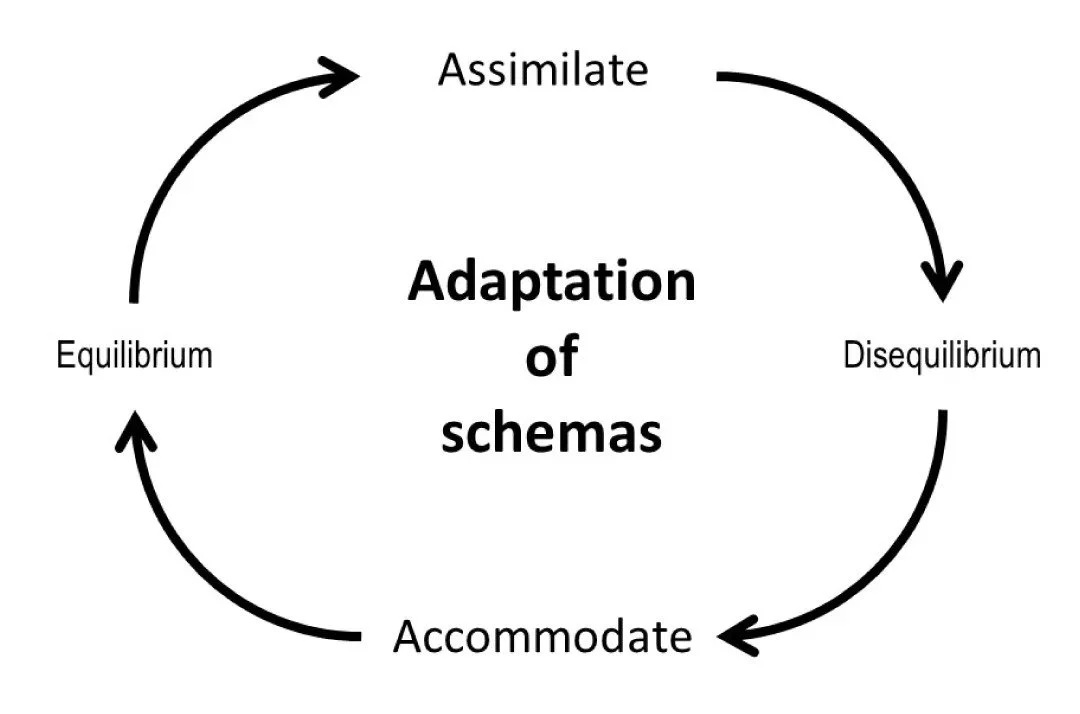
In aligning Piaget's Cognitive Developmental Theory with the impact of technology, particularly the dynamic nature of scrolling, we delve into how the constant exposure to changing content may influence the fundamental processes of assimilation and accommodation. The rapid succession of diverse images and information during scrolling challenges a child's existing schemas, requiring continuous adjustment and integration.
The fast-paced engagement with technology, exemplified by scrolling, could potentially disrupt the equilibrium process in Piaget's theory. The influx of new information without sufficient time for assimilation may lead to a persistent state of disequilibrium, demanding frequent cognitive adjustments to accommodate the ever-changing stimuli presented by technology. Therefore, heavy monitoring needs to be present to prevent it from turning into something negative.
Furthermore, Piaget highlighted the importance of hands-on, physical activities in a child's early learning experiences. In the digital age, this concept resonates with the idea of embodied cognition, where thought and behavior result from a dynamic interplay between the brain, physical activity, and environmental stimuli. Imagine a toddler engaging with an interactive learning app that encourages tapping, dragging, and other physical interactions. In this scenario, the child's cognitive development is not only stimulated by the on-screen content but also by their bodily engagement, reflecting Piaget's belief in the fundamental connection between physical activity and cognitive growth during infancy.
In summary, Piaget's theory suggests that clear paths exist which could turn excessive or unhealthy screen use into a negative experience. However, a healthy use of screens could significantly contribute to cognitive growth during development, as long as there is a level of interaction involved.
Vygotsky's Sociocultural Theory
🗣️
Vygotsky's Sociocultural Theory 🗣️
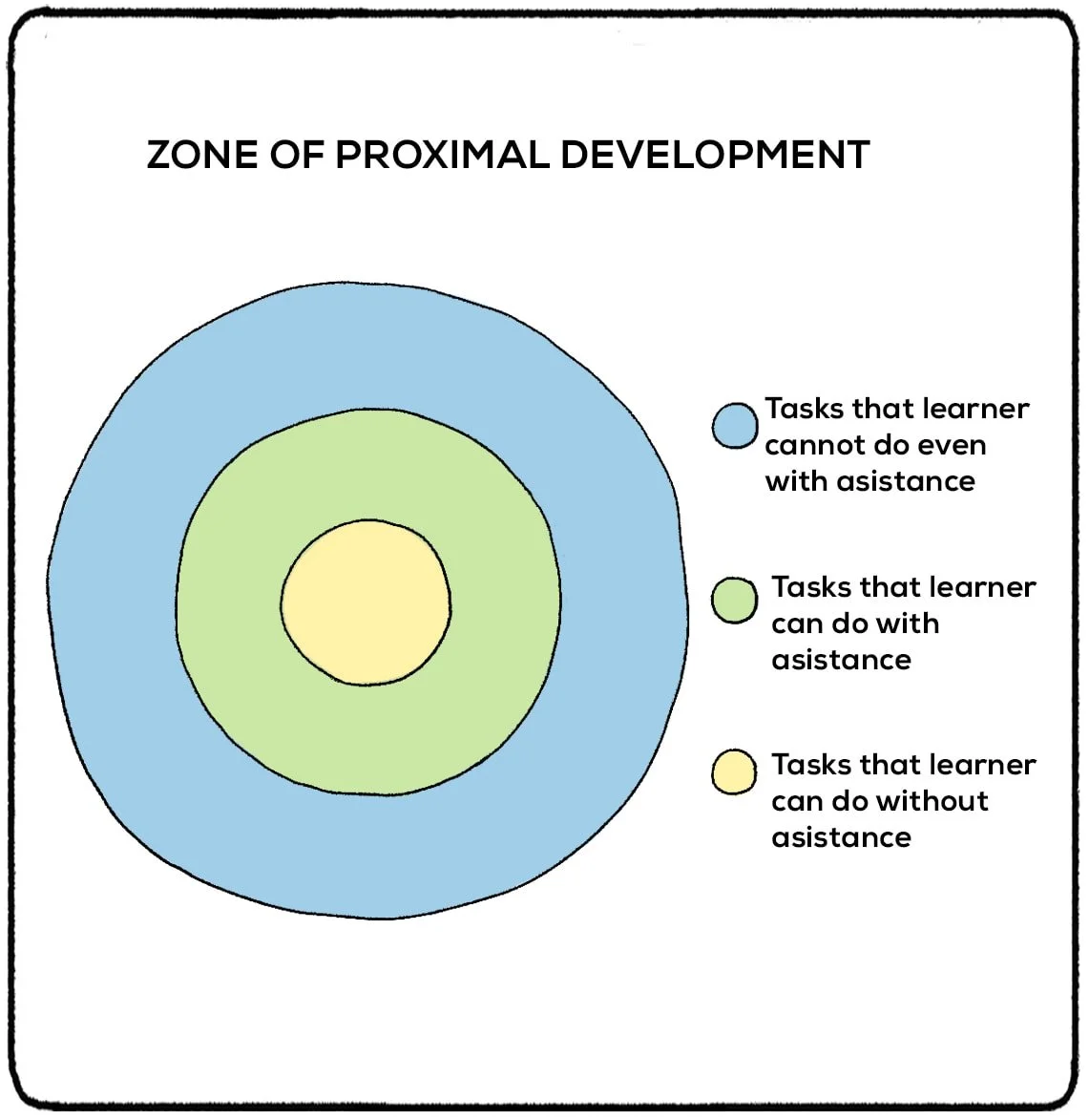
In the realm of scrolling and technology, Vygotsky's emphasis on the importance of social interaction and cultural context interlink. Imagine a scenario where a child explores an educational app or online platform that encourages collaborative problem-solving. The child interacts with a more knowledgeable peer or receives guidance from a skilled helper, mirroring Vygotsky's concept of the zone of proximal development (ZPD).
Picture this: a child encounters a challenging puzzle on a digital platform. The app, designed with Vygotsky's principles in mind, assesses the child's understanding. If the child struggles, the app provides scaffolding—subtle hints, suggestions, or questions that guide the child toward a solution. The digital environment becomes a dynamic space for learning, adapting the level of support based on the child's responses.
While Vygotsky's Sociocultural Theory provides a positive lens for understanding the potential benefits of technology in early child development, it's important to acknowledge that the impact can vary based on the nature of the digital experiences and the quality of social interactions.
-
Zone of Proximal Development (ZPD): Technology, when designed with educational intent, can create digital environments that align with a child's ZPD. Interactive apps and collaborative online platforms can serve as spaces for learning that is just beyond what a child can do independently.
Scaffolding in Digital Learning: Similar to real-world scenarios, digital platforms can offer scaffolding by providing guidance and support tailored to a child's needs. This adaptive support can enhance problem-solving skills and encourage independent thinking.
-
Quality of Digital Content: The impact of technology on children depends on the quality of the content and experiences provided. Educational and age-appropriate digital content is more likely to align with Vygotsky's theories than content designed solely for entertainment.
Balancing Screen Time: While technology can offer valuable learning experiences, it's crucial to balance screen time and ensure a diverse range of activities for holistic development. Excessive screen time may lead to challenges like digital overload and potential drawbacks on physical activities.
Parental Involvement: Vygotsky's theory emphasizes the role of more knowledgeable individuals. In the digital context, parents and caregivers play a crucial role in guiding and facilitating positive technology use. Active involvement ensures that the digital experiences align with the child's developmental needs.
It is important to note that, while the traditional interpretation of Vygotsky's theory revolves around face-to-face interactions, the adaptation for technology involves recognizing and leveraging the social and collaborative aspects that can be embedded in digital experiences. The key is to ensure that technology complements, rather than replaces, the rich social interactions that are crucial for a child's development.
Erikson's Psychosocial Development Theory
📈
Erikson's Psychosocial Development Theory 📈
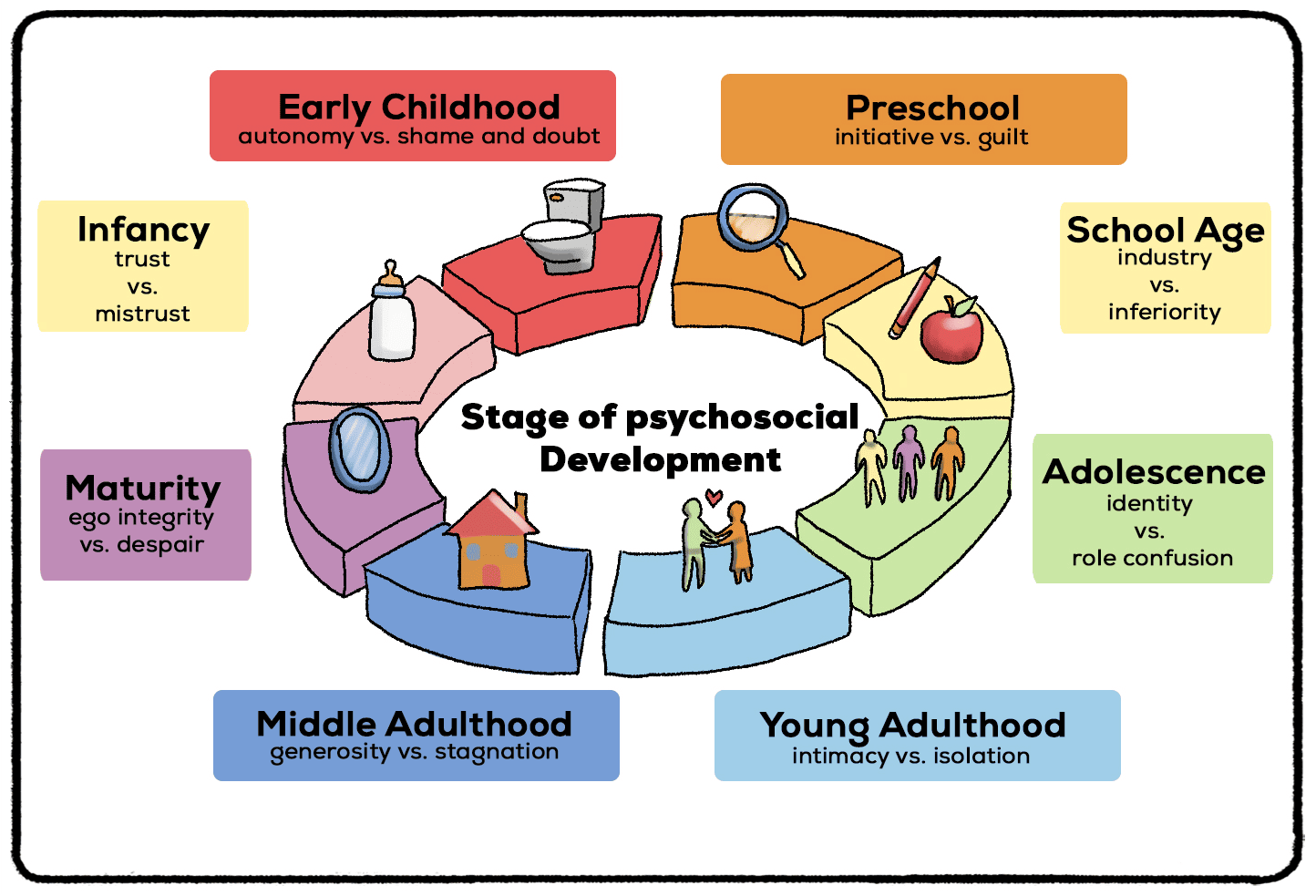
In aligning Erikson's Psychosocial Development Theory with the influence of technology, especially the dynamics of scrolling, we observe that an overabundance of digital exposure during each developmental stage may potentially contribute to challenges. For instance, an excessive reliance on technology during the Trust vs. Mistrust stage could hinder the establishment of genuine trust. Similarly, a surplus of screen time during the Autonomy vs. Shame and Doubt stage might lead to feelings of inadequacy or doubt in real-world activities. Specifically, there can be a great hindrance in the formation of self-directed behavior, as technology may sometimes make the person reliant on it. This reliance can lead to comfort in childhood, potentially hindering the development of their independence and autonomy skills. It becomes evident that maintaining a balanced and mindful approach to technology is essential to foster positive psychosocial development throughout these critical stages.
Bronfenbrenner's Ecological Systems Theory
👥
Bronfenbrenner's Ecological Systems Theory 👥
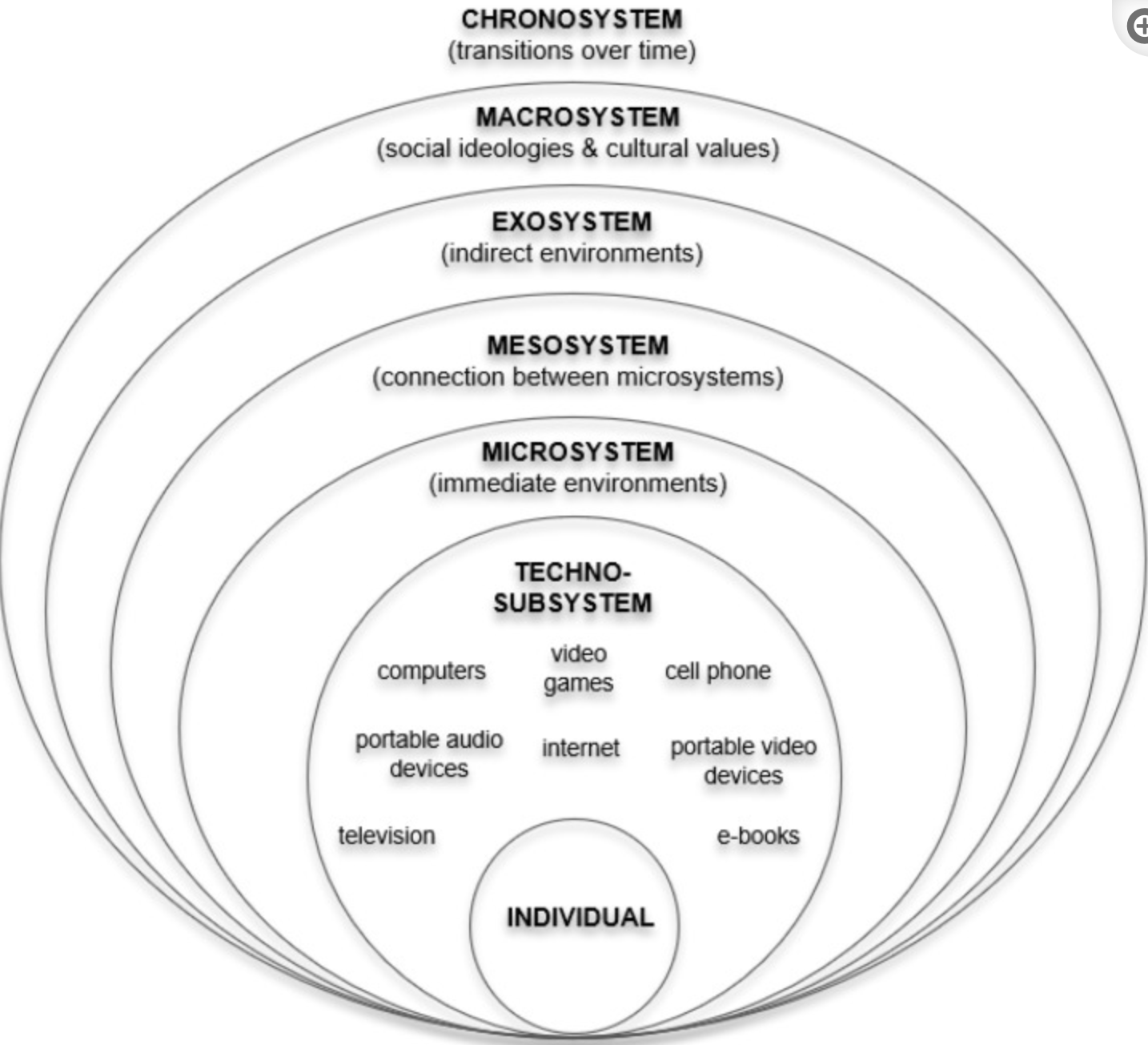
In aligning Bronfenbrenner's Ecological Systems Theory with the impact of technology, specifically the dynamic nature of scrolling, we can navigate through the various ecological layers that influence a child's development.
The microsystem: we can explore the immediate interactions with technology within familial and educational contexts, considering how screen time and scrolling dynamics shape interpersonal relationships.
Transitioning to the mesosystem, we analyze the interplay between home and school settings, addressing the collaborative efforts or potential conflicts in guiding a child's technology use.
The exosystem widens the lens to external influences, such as media portrayals and workplace demands on parents, casting indirect effects on the child's digital experiences.
The macrosystem reveals cultural norms and societal values surrounding technology, impacting the child's perception of screen time and digital interactions.
Lastly, the chronosystem introduces the dimension of time, revealing how technological advancements over different periods shape a child's developmental responses to evolving screen technologies and content trends.
(Levine & Munsch, 2024)
The significant impact of digital technology on the microsystem and mesosystem can be attributed to the close and immediate interactions occurring within these systems. Here's a breakdown:
Microsystem (Immediate Environment): Digital technology directly influences the immediate environment where a child lives, interacts with caregivers, family members, and engages in educational settings like school. The proximity and intensity of these interactions make the microsystem highly susceptible to the effects of digital engagement.
Mesosystem (Interconnected Microsystem Parts): Digital technology, especially in the context of home and school, becomes a connecting factor.
Anyway, as we observe the image above, a whole subsystem dedicated to technology has emerged in this new updated model by Johnson and Puplampu. A new 'ecological techno-subsystem' has been introduced, and it is understandable how immediate of an impact it has on individuals, considering the constant presence of various forms of technology in our surroundings. To some extent, we can argue that technology is more prevalent and present than close individuals in our lives. Therefore, this theory allows us to acknowledge the vast power technology holds. Its impacts are significant, and there needs to be heavy monitoring of the content we consume.

Piaget: Scrolling shapes cognitive development.

Vygotsky: Tech as tool for social learning.

Erikson: Trust in digital experiences matters.
Onwards!
(Practical Psychology, 2023)

Bronfenbrenner: Tech shapes immediate and collaborative contexts.
At last, we have discussed four critical theories in early child development and have related them to the issue of technology among children. It has been interesting to observe the different ways children develop and how screens affect them at various stages. Some theories view technology through a more positive lens, while others adopt a more negative perspective. However, it is common among all these theories that they emphasize the importance of balance and recognize the existence of limits or boundaries where technology can transition from being beneficial to detrimental in development. They can serve as our guide, but, again, each theory provides insight into how and where technology, particularly addictive scrolling, can become a hindrance to development.
At this point in our journey, armed with the knowledge of these theories, we will now delve into the empirical evidence of brain patterns. This exploration will enable us to make more accurate and well-supported claims regarding our investigation.