3/5: Decoding Early Brain Patterns - Insights from Neuroimaging Techniques and Empirical Evidence
In this section, there will be concrete evidence which represents the biological changes that are occurring due to this issue, specifically on the brain.
Exploring patterns of brain activation, changes in neural connectivity, and the release of neurotransmitters during technology interactions could provide valuable insights into the influence of early exposure to technology on cognitive functions, attentional mechanisms, and emotional regulation.
Next, we will slowly go through a breakdown of an interesting study focused on the structural integrity of brain white matter tracts and cognitive functions in 47 preschool-aged children (Hutton et al., 2020). Specifically, it explores the relationship between screen media exposure and measures of white matter integrity, language skills, executive functions, and emergent literacy.
How was this done?
There were various methods employed to investigate the association between screen-based media use and brain development in preschool-aged children. The italicized text helps to give broken down explanations!
Diffusion Tensor Imaging (DTI): DTI provides insights into the microstructural organization and myelination of white matter tracts in the brain. It's like taking special pictures of the brain to see how the pathways in the brain, called white matter tracts, are put together and covered with a protective coating called myelin. (DTI Scalars, n.d.)
Key measures derived from DTI include Fractional Anisotropy (FA) and Radial Diffusivity (RD), which reflect the integrity and myelination of these tracts, respectively. FA and RD help us see how healthy and well-coated these pathways are in the brain.
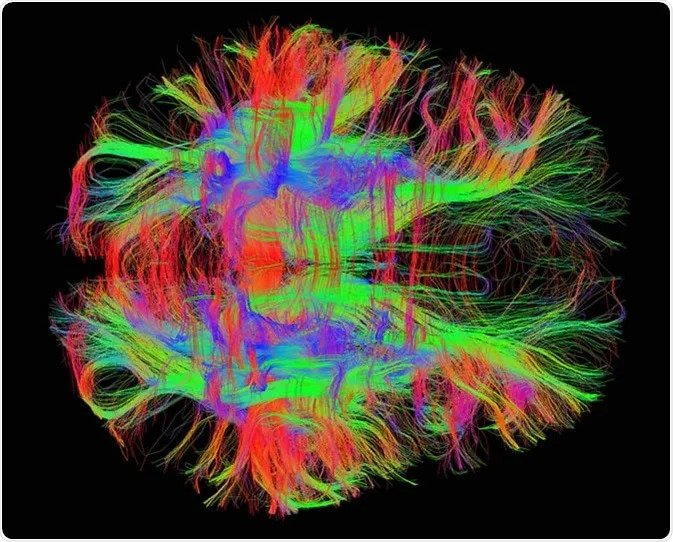
This is an example DTI! Here’s how it essentially works - This is a type of MRI (Magnetic Resonance Imaging) technique that measures the diffusion of water molecules in the brain. Since water molecules move more freely along the length of nerve fibers (axons) than across them, DTI can map out the pathways of these fibers, which are primarily made up of white matter. (DTI Scalars, n.d.)
Now, we will quickly go through the explanations of these additional techniques to understand their implications, and re-visit our central project question. (Hutton et al., 2020).
Tract-Based Spatial Statistics: This technique allows us to analyze DTI data and identify correlations between white matter integrity and screen media use. It helps us look at the pictures of the brain and find patterns that connect how much screen time a child has with how their brain pathways look.
ScreenQ Survey: To assess screen media use, we administer the ScreenQ survey, which captures various aspects such as access, frequency, and content viewed. We ask parents questions about how often their child uses screens, what they watch or play, and how easy it is for them to get to screens.
Standardized Assessments: In addition, we evaluate children's language and literacy skills using standardized assessments such as the Expressive Vocabulary Test, Second Edition (EVT-2), Comprehensive Test of Phonological Processing, Second Edition (CTOPP-2), and Get Ready to Read! (GRTR). We test how well children talk, understand words, and are ready to learn to read using special tests.
Throughout, we’ll keep the ScreenQ Survey as our reference point, correlating it to the different results and interpretations (Hutton et al., 2020). This is because this survey’s mean score was 8.6, which reflects moderate screen-based use. There was also a median screen-time use of 1.5h per day, and a lot of children also had a television in their bedrooms (Hutton et al., 2020)..
Expressive Vocabulary Test, Second Edition (EVT-2):
This test measures a child's ability to expressively use and understand vocabulary.
It assesses their vocabulary skills by asking them to name pictures and describe objects.
Higher scores indicate better vocabulary skills.
Comprehensive Test of Phonological Processing, Second Edition (CTOPP-2):
This test evaluates a child's phonological processing abilities, which are essential for reading fluency.
It includes subtests that assess skills such as phonological awareness, phonological memory, and rapid naming.
Higher scores suggest stronger phonological processing skills.
Get Ready to Read! (GRTR):
GRTR is an assessment of core literacy skills necessary for successful reading development.
It measures skills such as alphabet knowledge, print concepts, and phonological awareness.
Higher scores indicate better preparedness for reading.
Results and Negative Correlation:
The study found that higher ScreenQ scores, indicating increased screen media use, were associated with lower scores on the EVT-2, CTOPP-2, and GRTR assessments.
This negative correlation suggests that children with greater exposure to screen media tended to perform worse on tests measuring vocabulary, phonological processing, and emergent literacy skills.
Essentially, the more screen time children had, the poorer their performance on these cognitive assessments, highlighting a potential negative impact of excessive screen media use on language and literacy development.



We will now dive into some MRI images, specifically of the technique DTI. As a reminder: White matter tracts are bundles of axons, which are like the "wiring" that allows different parts of the brain to communicate with each other (Giedd, 2015). These images have great implications, and it is amazing to connect the visuals to genuine explanations as to what it means.
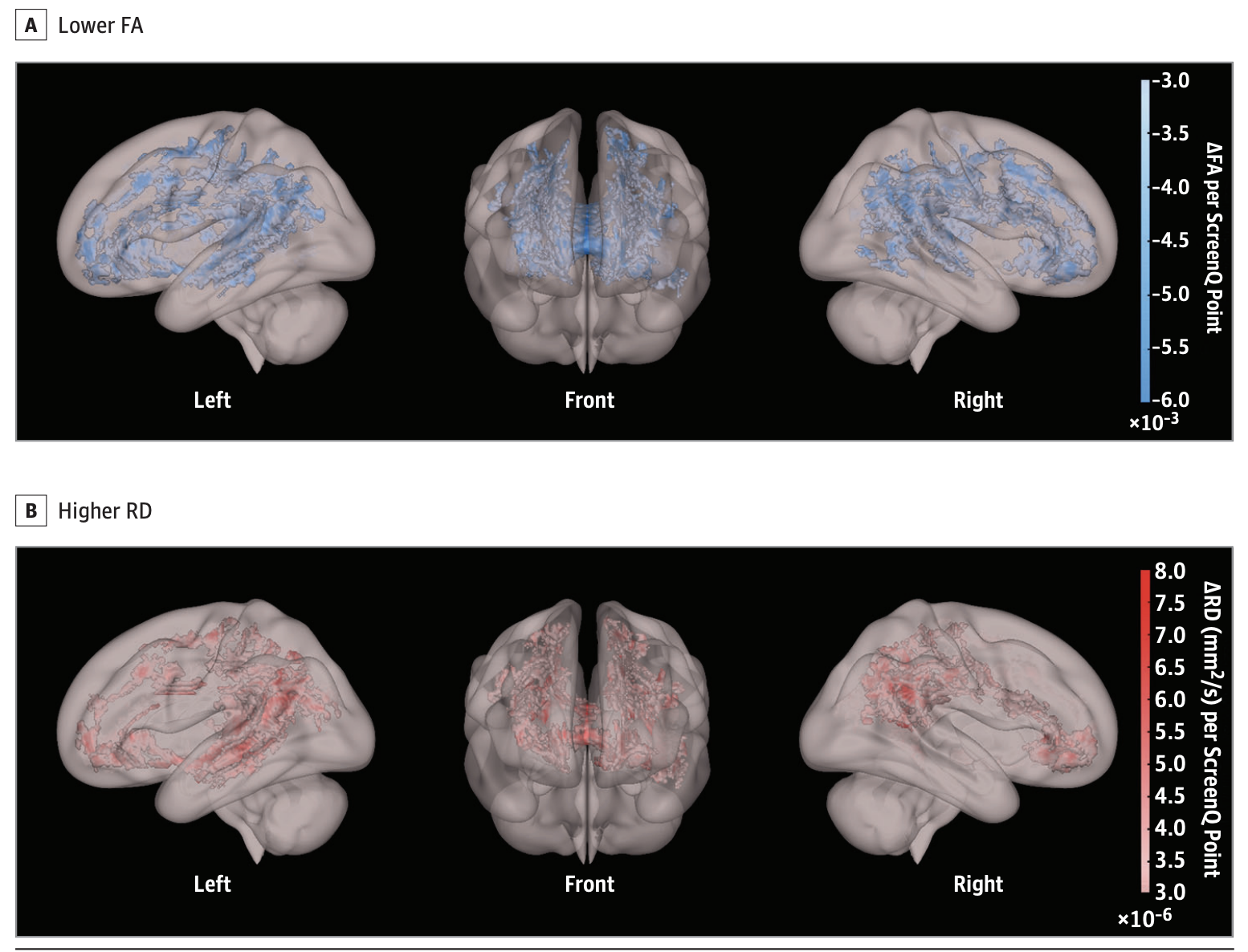
The image includes two panels labeled A and B, with each showing three views of the brain: left, front, and right. These images highlight areas of the brain with altered Fractional Anisotropy (FA) and Radial Diffusivity (RD), which are measurements used in DTI to assess the integrity of white matter (Hutton et al., 2020).
Fractional Anisotropy (FA):
As a broken down explanation, think of white matter like a bundle of wires. FA tells us how well-organized these wires are. When FA is lower, it's like the wires are fraying or not as neatly lined up, which can mean there's some kind of problem in how brain signals are traveling.
Lower FA (as shown in panel A) could indicate several things, including loss of fiber tract integrity, demyelination (loss of the protective sheath around axons), or increased membrane permeability. It could be associated with various neurological conditions, normal aging, or even changes due to learning and plasticity.
Radial Diffusivity (RD):
As a broken down explanation, RD looks at how water moves from one side of the wires to the other. If RD is higher, it's like water can leak out more easily. This might mean that the insulation around the wires (similar to the myelin sheath around axons) is not doing its job properly.
Higher RD (as shown in panel B) often suggests demyelination, as it means water is more free to diffuse across the axon's normal pathway, which may occur if the myelin sheath is damaged
Results and Interpretations:
The study found that higher ScreenQ scores, indicating increased screen media use, were correlated with lower FA and higher RD in various white matter tracts of the brain..
These correlations were particularly prominent in tracts associated with language, executive functions, and emergent literacy skills.
For example, the arcuate fasciculus, a tract crucial for language processing, showed lower FA and higher RD with increased screen media use. In the brain, the ability to process phonological information is associated with specific regions and pathways, such as the arcuate fasciculus, which connects areas responsible for understanding and producing speech.
These findings suggest that greater exposure to screen media may be associated with alterations in the micro-structural integrity of white matter tracts important for cognitive functions.
Essentially, the MRI DTI results indicate that excessive screen media use in preschool-aged children may have adverse effects on the structural development of the brain, particularly in areas critical for language, executive functions, and emergent literacy skills.
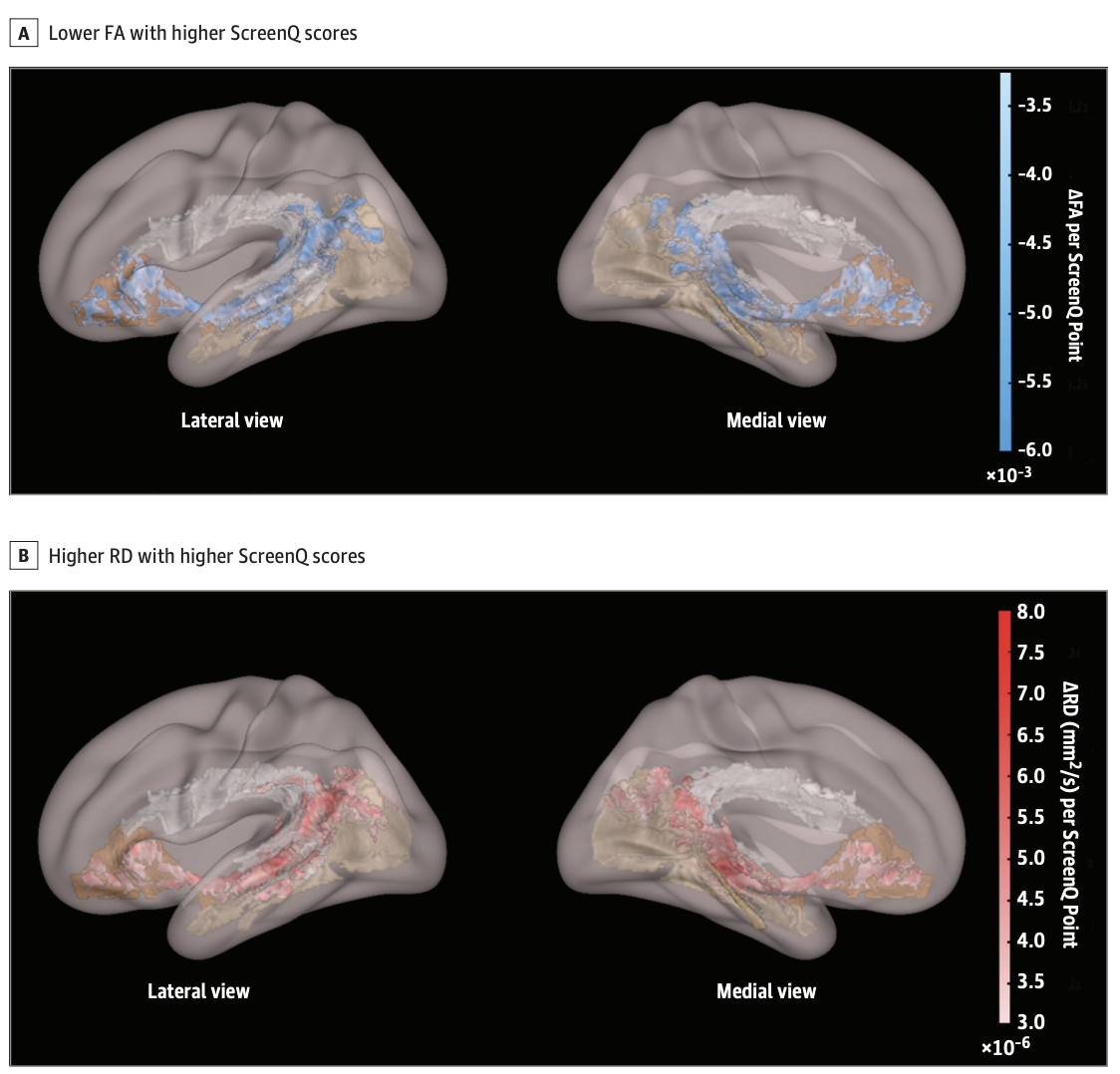
Now, regarding the second set of images, they depict results obtained using a different technique called Tract-Based Spatial Statistics (TBSS) (Hutton et al., 2020). TBSS is still based on DTI data but utilizes a different analytical approach. Instead of directly analyzing FA and RD values across the brain like in the first set of images, Tract-Based Spatial Statistics (TBSS) typically involves aligning the DTI data from multiple individuals onto a common template or skeleton. This process allows researchers to compare and analyze white matter integrity across all subjects in a standardized way. So, while both sets of images involve DTI and analyze FA and RD, they utilize different analytical methods (standard analysis vs. TBSS) to examine how screen media use influences white matter integrity in preschool-aged children.
The lateral and medial views allow researchers to observe which tracts are particularly affected by screen media use and how these alterations are distributed throughout the brain (Hutton et al., 2020). The data from all 47 preschool-aged children are combined and analyzed together. The color-coded areas on the brain represent regions where differences in Fractional Anisotropy (FA) or Radial Diffusivity (RD) values are observed across the entire group in relation to their screen media use.
By analyzing the data from all 47 children together using TBSS, researchers can identify consistent patterns or trends in white matter alterations associated with screen media exposure across the entire study cohort (Hutton et al., 2020). This approach helps ensure that the observed trends are not just isolated occurrences in individual participants but are instead meaningful and representative of the group as a whole. It allows researchers to draw more robust conclusions about the relationship between screen media use and brain development in preschool-aged children.
TBSS helped identify areas of the brain where the structural integrity of white matter tracts differed depending on the amount of screen time children were exposed to (Hutton et al., 2020). These differences suggest that prolonged screen media use may influence the microstructure of certain brain regions involved in various cognitive functions.
What has this study informed the public about? (Hutton et al., 2020)
TBSS and DTI both provided complementary information about the association between screen media use and alterations in white matter integrity. Both techniques revealed that higher ScreenQ scores, indicating increased screen media exposure, were correlated with changes in Fractional Anisotropy (FA) and Radial Diffusivity (RD) values in specific brain regions.
While DTI focused on analyzing the overall white matter integrity across the brain, TBSS specifically identified regions where these alterations were most pronounced. So, in a sense, TBSS reaffirmed the findings observed through DTI by pinpointing specific areas of the brain where the effects of screen media exposure were most notable.
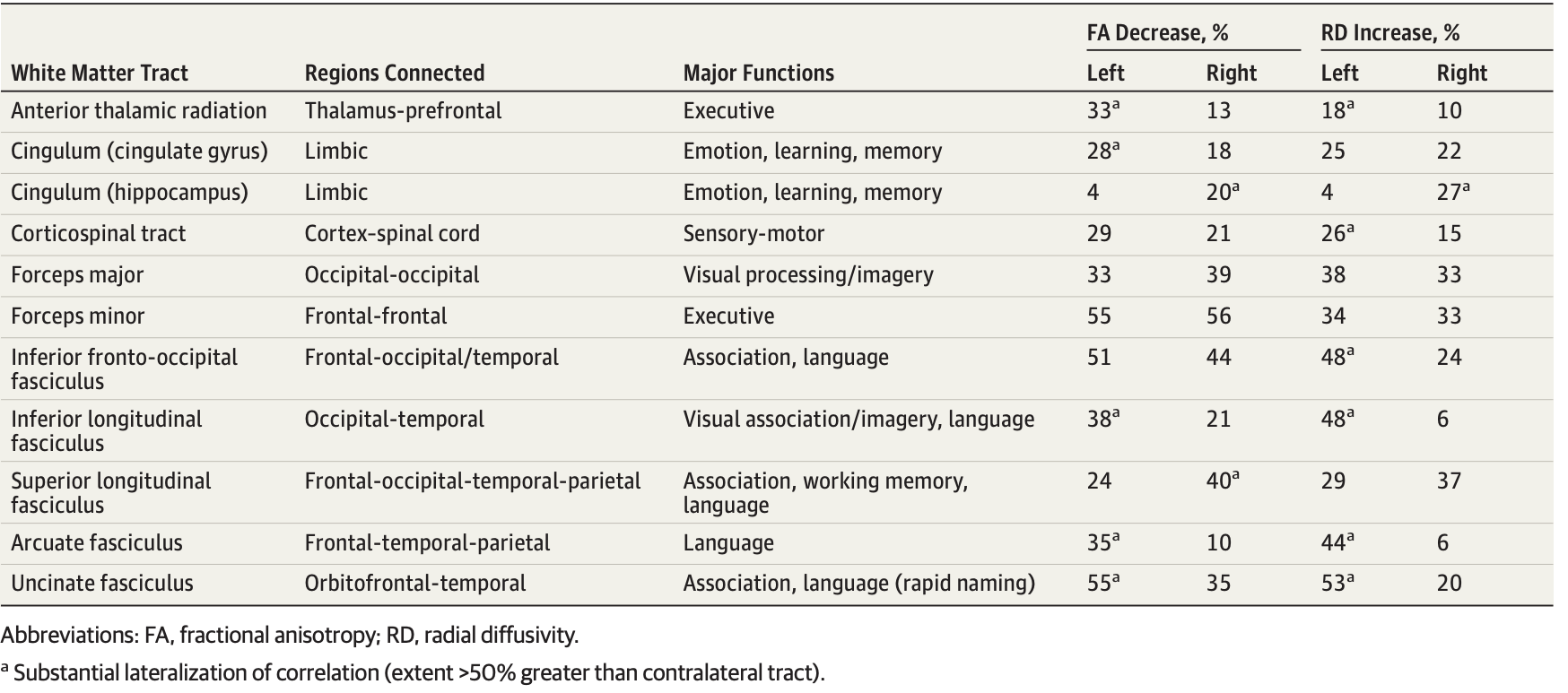
This data collected from the study makes this image a gold mine (Hutton et al., 2020). We're able to observe the distinct effects on Fractional Anisotropy (FA) and Radial Diffusivity (RD) whilst also knowing the major functions that these different tracts serve. Given our knowledge of these major functions from previous brain studies, the observed increases and decreases in FA and RD become meaningful in terms of the specific functions being affected. The ability to interpret these increases and decreases in FA and RD—and to correlate them with the rise in screen time observed in our sample of 47 children—makes this image incredibly valuable.
We now understand that this study significantly focused on language and literacy development in relation to screen time, highlighting its impact on the cognitive, social, and emotional development of young children through cognitive processing. Additionally, attention span may be indirectly related to some cognitive functions mentioned, such as executive functions and speed of processing (Hutton et al., 2020). According to the table, the anterior thalamic radiation tract, which is associated with executive function, exhibited a FA decrease of 33% and 13%, and a RD increase of 18% and 10% in the left and right parts of the brain, respectively. Furthermore, the forceps minor tract, also related to executive function, showed an FA decrease of 55% and 56%, and an RD increase of 34% and 33% in the left and right sides, respectively. These changes suggest implications for altered attention spans among the sample of 47 preschool-aged children. Therefore, this study is not only an important source of evidence for immediate real-world application but also a topic worthy of further investigation in future research.
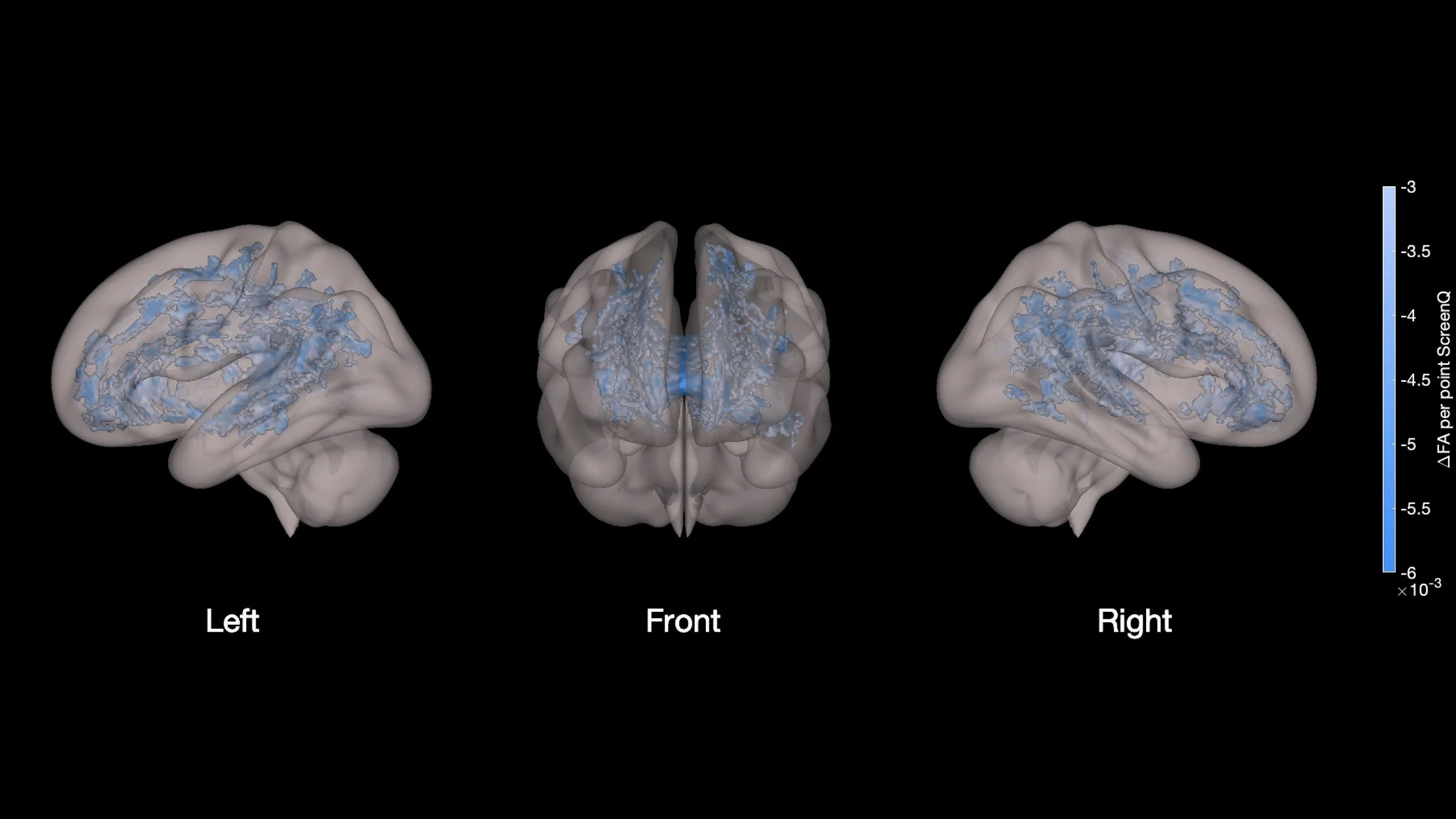
"Less well developed white matter tracts".
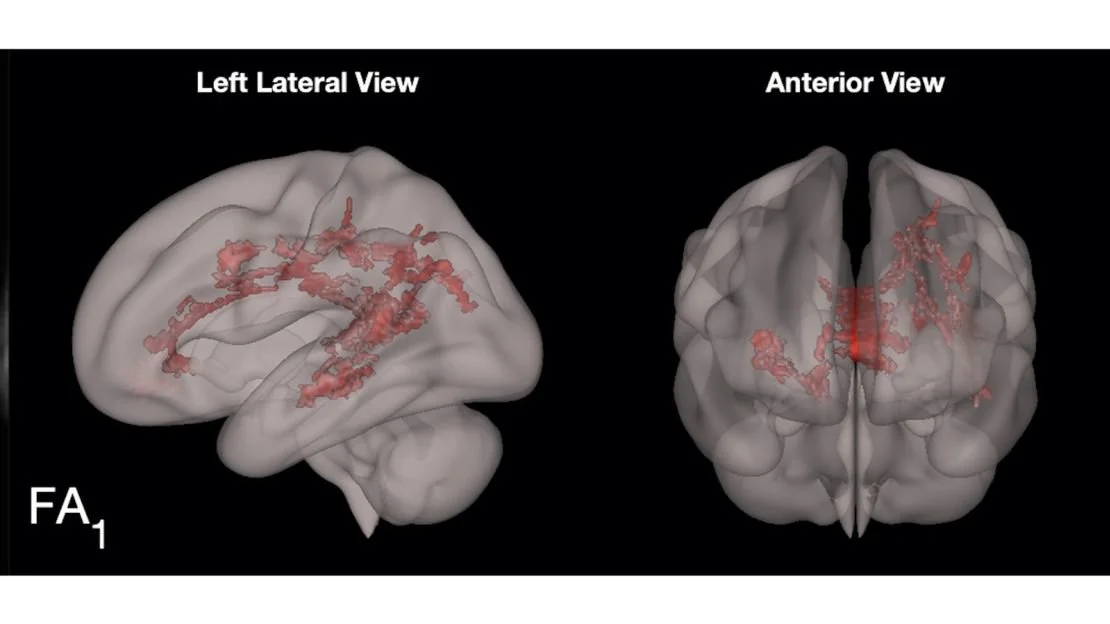
“Brain areas linked with child engagement scores”
The impact of books on a child’s brain. Look at all that red - an increase in organized white matter (we know what that means now!)
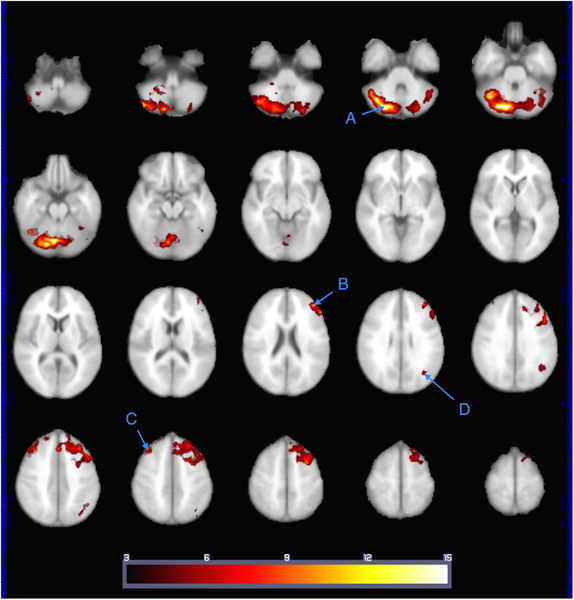
Now that we’ve become experts on interpreting MRIs and their different types, you might think understanding these images should be easy! Just kidding—it likely takes professionals a lot of practice to interpret them correctly. However, the images we have come from researchers skilled in this area, drawn from three studies. Two of these studies link a child’s brain development to technology use (images 1 and 3), and another study connects a child’s brain activity to reading books. Delving deeper into this specific book research article would be fascinating. Interestingly, the middle image shows an increase in organized white matter in areas marked by red spots. This is very promising for young children and almost the opposite of what we've discussed regarding screen time — the articles are linked to the images if you’d like to read!
However, we will now be moving on from this intriguing area of neuroimaging. At this point, we'll explore various approaches to better address this complex topic, acknowledging that there's no single definitive answer.